
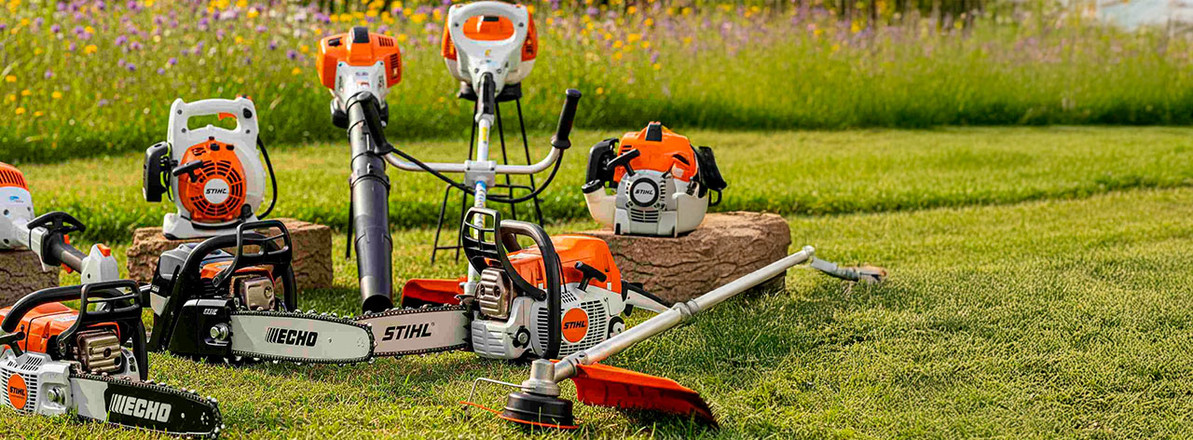
ECHO vs. STIHL: What You Need to Know Before Choosing a Brand
Echo and STIHL are known for building powerful and reliable tools, but they serve slightly different users and cater to different price points. Whether you’re focused on everyday yard work or heavy-duty commercial use, understanding the strengths of each brand will help you make a better decision.
These two brands come up in almost every comparison, and people often search questions like “Is ECHO better than STIHL?”, “Is STIHL better than ECHO?”, or even “Does STIHL make ECHO?”.
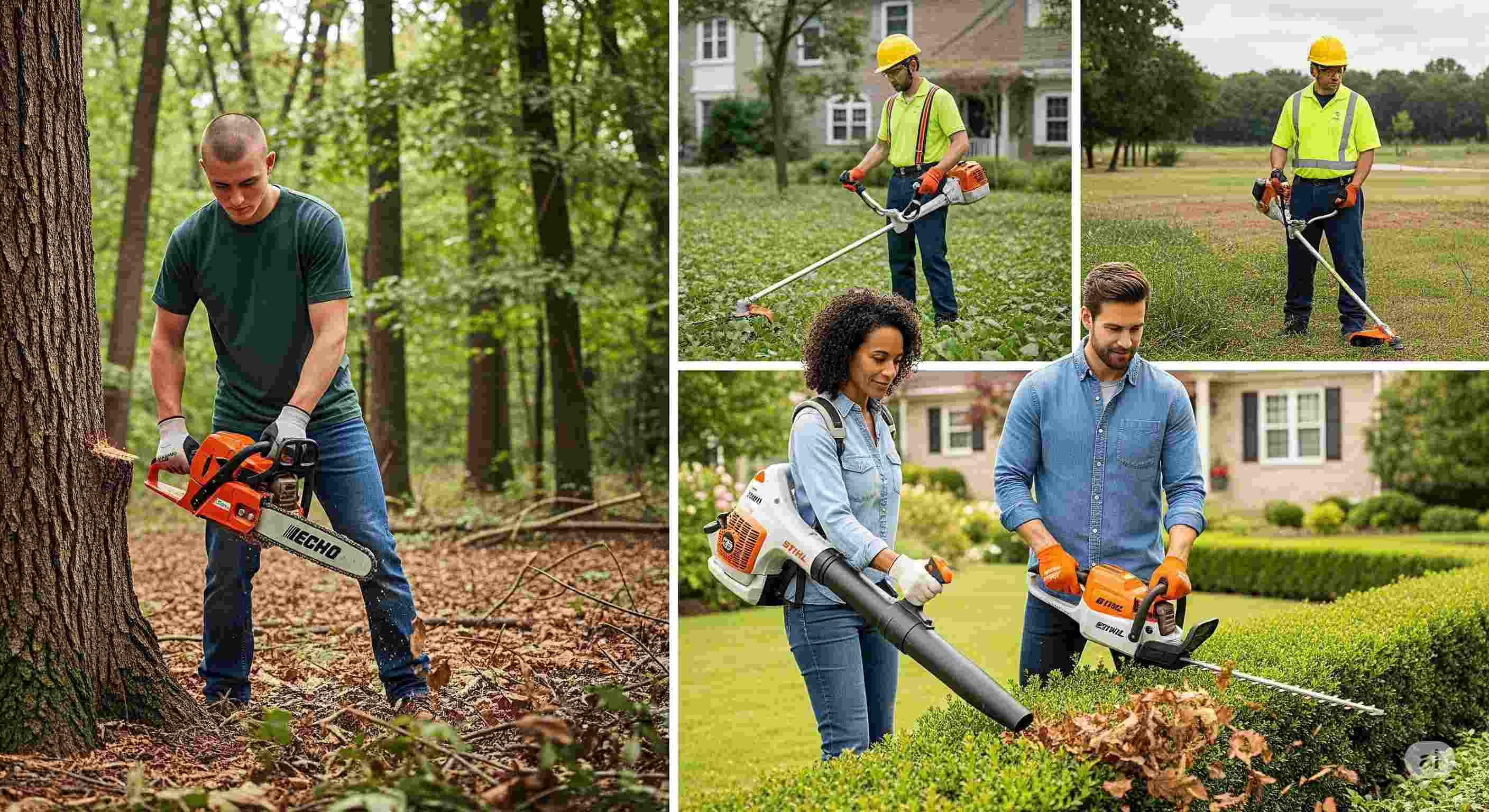
In this blog, we’ll break down performance, reliability, manufacturing differences, and answer the most common questions people have when comparing ECHO vs. STIHL.
Echo and STIHL: Performance and Everyday Use
With chainsaws, it's not spec talk—it's about how they perform when things get real. If pitting Echo and Stihl, here's what counts when the work gets actual: power, control, and endurance over the long term.
Echo delivers comfort. Stihl delivers dependability.
The echo is lighter and easier to start. Its i-30™ starting system and ergonomic design make it perfect for sporadic users. Homeowners, weekend trimmers, and new purchasers will appreciate Echo for its ease of use and comfort.
For yard maintenance, Echo also offers options that fit different user needs, from an Echo battery weed eater for quieter cordless trimming to an Echo straight-shaft weed eater for reaching under shrubs, along fence lines, and around open lawn areas. These tools are often chosen by homeowners and landscapers who want manageable equipment for regular trimming and edging work.
Power vs. Weight. Reliability vs. Accessibility.
The difference is not in the first cut, but in the hundredth. Echo is the smart choice for light to medium tasks. Stihl is what you want when there isn't room for error.
- Echo gives you speed, comfort, and quick handling.
- Stihl gives you power, durability, and precision in extreme conditions.
| Category | Echo | Stihl |
|---|---|---|
| Power | Good for light/medium tasks | Excellent for heavy-duty and pro use |
| Startup | Easy with i‑30™ system | Advanced (M-Tronic), less intuitive |
| Handling | Lightweight, ergonomic, user-friendly | Heavier, but with better power-to-weight balance |
| Durability | May leak oil, parts less robust after daily pro use | Designed to last under daily pro conditions |
| Best For | Homeowners, DIYers, casual users | Arborists, landscapers, loggers, professional contractors |
Which one is better? Echo or STIHL?
Stihl outperforms Echo when you need pro-level tools that can take a beating and keep cutting. If your chainsaw is a daily tool, go with STIHL.
Echo wins for casual users who need something lightweight, budget-friendly, and easy to start. It’s a smart choice for homeowners or weekend jobs, not logging crews. You can check our ECHO parts manual for more related information on our site. These parts manuals are free for everyone.
Who Owns What, and Where They're Made
One of the most frequent questions among buyers is whether STIHL either owns ECHO or makes ECHO equipment. These are falsehoods. STIHL and ECHO are two completely different companies with no shared possession or production.
STIHL is a German company that manufactures and builds most of its products in America, at its Virginia Beach plant. ECHO, however, is owned by the Yamabiko Corporation, a Japanese company. The majority of ECHO's North American line is built in Lake Zurich, Illinois, with domestic and foreign parts.
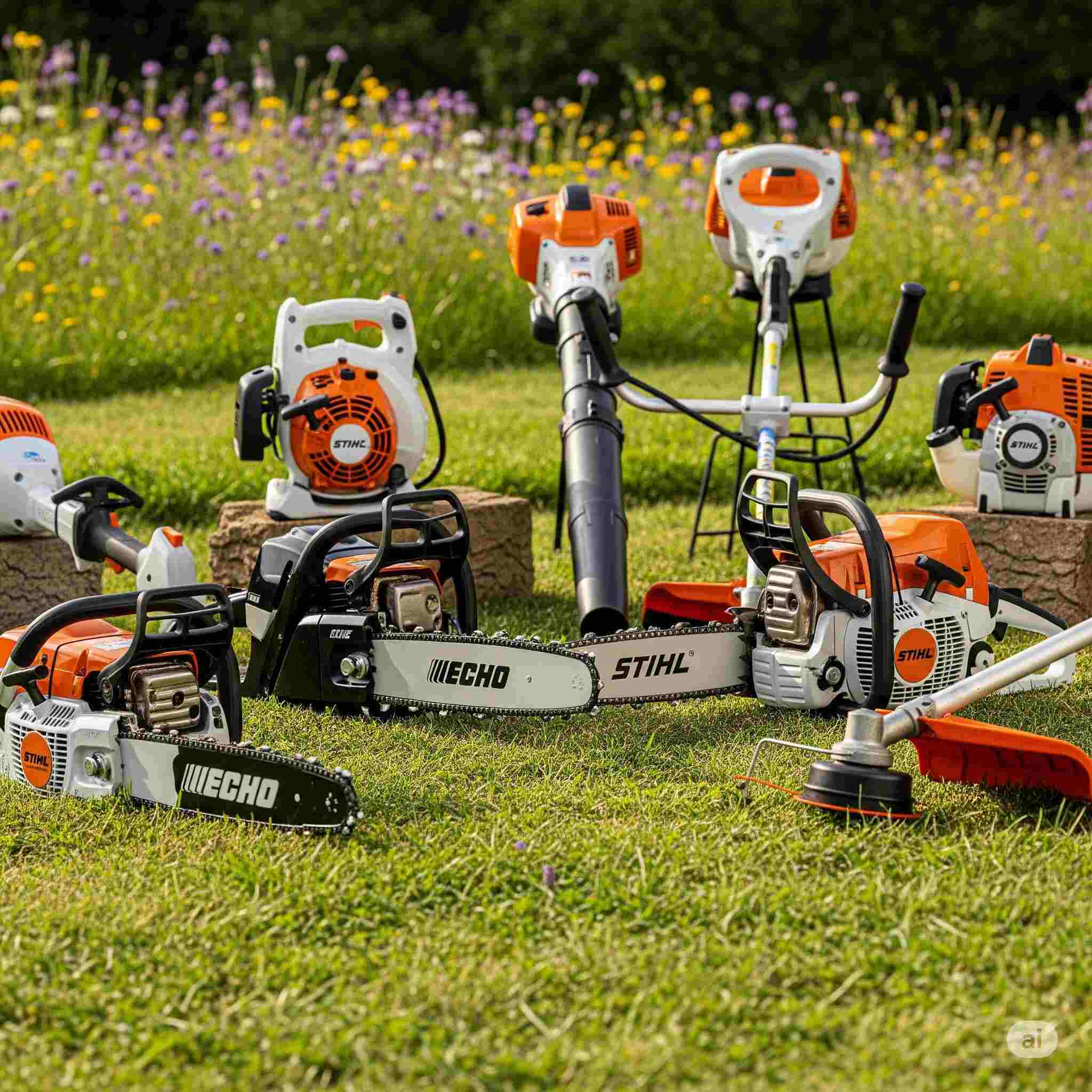
This is important to consumers interested in local manufacture or willing to support particular methods of manufacture. It also deals with two commonly asked questions: "Is ECHO owned by STIHL?" and "Is ECHO made by STIHL?"—to both of which the answer is no.
Echo Line Trimmer Head Maintenance
For users comparing Echo and STIHL for everyday yard work, maintenance is an important part of the decision. An Echo line trimmer head is one of the parts most users interact with regularly because it controls how the trimmer line feeds during grass trimming, edging, and weed control.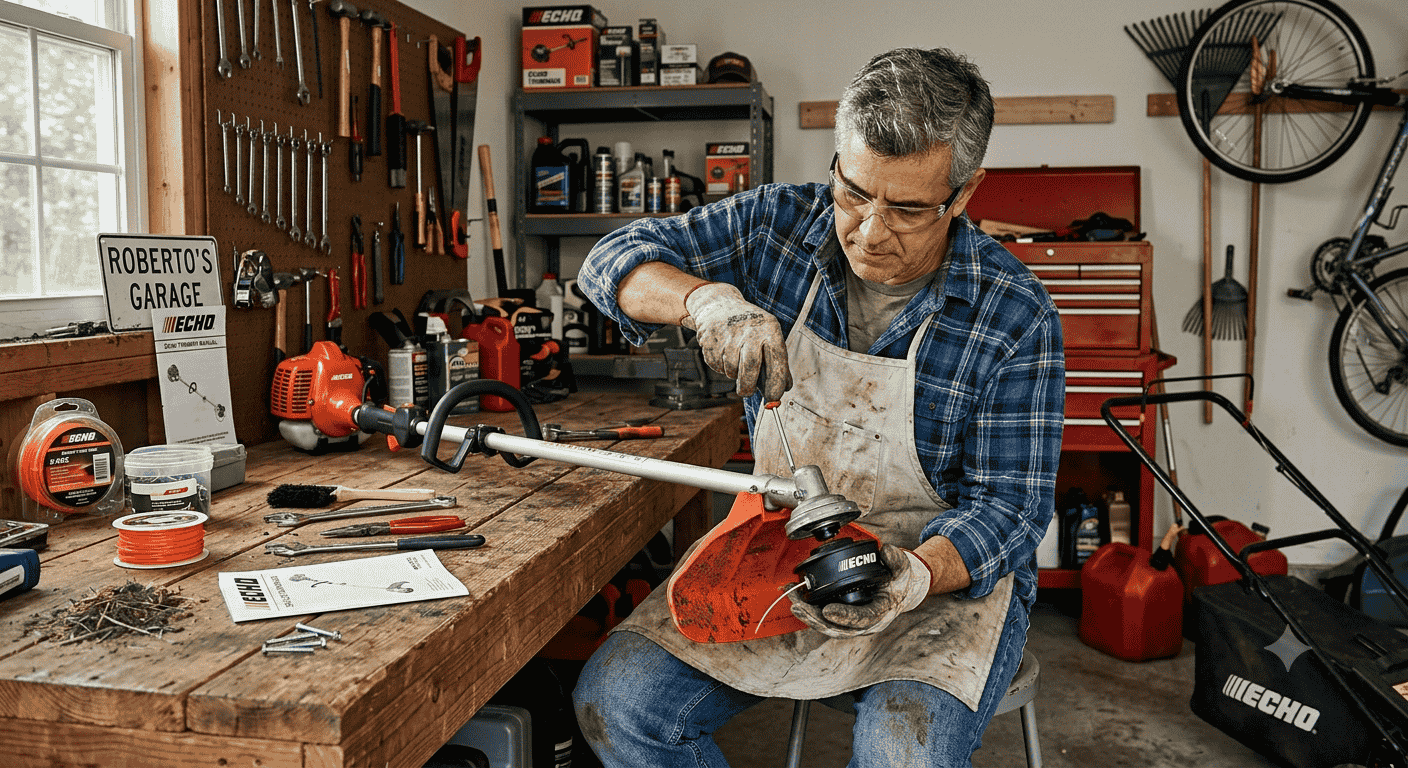
When choosing Echo equipment, check the trimmer head style, line diameter, spool design, and replacement parts available for your model. A worn trimmer head can cause feeding issues, line jams or uneven cutting, even when the trimmer itself is running correctly. Echo users should review the model number, parts diagram, or owner's manual before replacing a line trimmer head or related spool components.
ECHO vs. STIHL: Key Differences at a Glance
ECHO and STIHL both manufacture outdoor power equipment for residential and professional applications. Their product lines include gasoline-powered and battery-powered equipment, with features and specifications that vary by model.
Instead of assuming one brand is always more powerful or durable, compare equipment within the same category and intended workload.
| Feature | ECHO | STIHL |
| Equipment Categories | String trimmers, chainsaws, leaf blowers, and other outdoor power equipment | String trimmers, chainsaws, leaf blowers, and other outdoor power equipment |
| Target Users | Homeowners, landscaping crews, and professional operators | Homeowners, landscaping crews, and professional operators |
| Engine Options | Gas-powered and battery-powered models | Gas-powered and battery-powered models |
| Starting Systems | i-30 starting system on select gas-powered models | Easy2Start on select models and other model-specific technologies |
| Trimmer Heads | Speed-Feed and other compatible cutting head systems | AutoCut and other compatible cutting head systems |
| Maintenance | Depends on engine type, operating hours, and equipment model | Depends on engine type, operating hours, and equipment model |
| Replacement Parts | Availability varies by model and component | Availability varies by model and component |
| Best Choice | Depends on specifications, comfort, workload, and budget | Depends on specifications, comfort, workload, and budget |
Both brands offer equipment for demanding applications, so the best way to compare them is to evaluate specific models rather than relying on brand reputation alone.
ECHO vs. STIHL: Performance, Power, and Reliability
When comparing ECHO vs. STIHL performance, it's important to look beyond brand names. Engine displacement, power output, equipment weight, cutting attachments, and operating conditions can all affect how a machine performs.
For occasional yard maintenance, ease of starting, manageable weight, and comfortable handling may matter more than maximum power. Professional users may place greater emphasis on productivity, operating endurance, serviceability, and performance during extended use.
ECHO offers equipment designed for different levels of outdoor maintenance, including models with its i-30 starting system and ergonomic features intended to make operation more manageable.
STIHL also offers equipment with model-specific technologies, including Easy2Start and electronically controlled engine management systems on certain products.
However, these features aren't available across every model from either manufacturer.
Reliability is another important consideration. Regular maintenance, correct operating procedures, fuel quality, storage conditions, and replacement part compatibility can all influence equipment service life.
Rather than assuming STIHL is always more durable or ECHO is always easier to use, compare the specifications and maintenance requirements of the particular models you're considering.
ECHO vs. STIHL String Trimmers
String trimmers are among the most commonly compared products from ECHO and STIHL. Both manufacturers offer equipment designed for trimming grass, clearing weeds, and maintaining areas that lawn mowers cannot easily reach.
When comparing an ECHO vs. STIHL string trimmer, consider engine performance, cutting width, weight, shaft design, starting system, and trimmer head compatibility.
Engine Power and Cutting Performance
Engine displacement is one specification to consider when comparing gasoline-powered string trimmers, but it doesn't tell the whole story.
Cutting performance also depends on engine design, power delivery, cutting head configuration, line diameter, and the vegetation being trimmed.
For example, the ECHO SRM-225 is a gasoline-powered string trimmer equipped with a 21.2 cc engine. It is designed for routine trimming and landscape maintenance applications.
STIHL offers comparable trimmer options, including the FS 56 RC-E, which is designed for residential lawn maintenance and similar outdoor tasks.
When comparing these models, evaluate the manufacturer's published specifications, recommended cutting attachments, and intended applications rather than focusing only on engine displacement.
Weight, Handling, and Starting Systems
Weight and ergonomics can make a noticeable difference during extended trimming sessions.
A lighter trimmer may be easier to maneuver around trees, fences, and landscaping features, while handle design and balance can influence operator comfort.
ECHO offers its i-30 starting system on select models, designed to reduce the effort required during starting.
STIHL offers Easy2Start on select equipment, providing another approach to simplifying engine startup.
Both manufacturers also offer different shaft and handle configurations.
Before choosing a trimmer, compare the equipment's published weight using the same measurement conditions, including whether the listed weight includes fuel, battery, or cutting attachments.
Trimmer Heads and Line Replacement
Trimmer head design is another important difference to consider when comparing ECHO and STIHL.
ECHO offers Speed-Feed trimmer heads, which allow users to reload cutting line without removing the spool on compatible models.
STIHL offers AutoCut and other cutting head systems, with line-loading and feeding procedures that depend on the specific head.
A convenient line-loading system can make routine maintenance easier, especially for users who replace trimmer line frequently.
Regardless of the brand, always check the recommended line diameter and cutting head compatibility before purchasing replacement components.
For ECHO equipment, you can explore compatible trimmer components through ECHO Parts Online or learn more in our guide on how to replace ECHO weed eater string.
ECHO vs. STIHL Chainsaws
When comparing ECHO vs. STIHL chainsaws, the most useful approach is to evaluate models intended for similar cutting applications.
Both brands manufacture chainsaws for homeowners and professional users, including equipment designed for property maintenance, firewood cutting, and more demanding work.
The right chainsaw depends on the type of wood, cutting frequency, operator experience, and manufacturer-approved cutting equipment.
Cutting Power and Bar Length Options
Chainsaw performance depends on several factors, including engine output, bar length, chain configuration, and cutting conditions.
A longer guide bar isn't automatically better. The engine must be capable of operating the recommended bar and chain combination effectively.
Both ECHO and STIHL offer chainsaws with different guide bar options, allowing buyers to choose equipment for specific cutting requirements.
When comparing chainsaws, review the manufacturer's recommended bar lengths, power specifications, weight, and approved chain configurations.
Also consider maintenance requirements, including chain sharpening, proper chain tension, and bar lubrication.
Homeowner vs. Professional Chainsaws
Homeowners typically use chainsaws for occasional tasks such as cutting firewood, clearing fallen branches, and maintaining trees around their property.
Professional operators may require equipment designed for frequent use, demanding cutting conditions, and extended operating periods.
Both ECHO and STIHL offer models for different user groups.
Rather than choosing STIHL solely because of its professional reputation or ECHO because of perceived affordability, compare individual chainsaws based on their intended use, specifications, service requirements, and total ownership cost.
A properly selected and maintained chainsaw is more useful than choosing a brand without considering the actual work.
ECHO vs. STIHL Leaf Blowers
Leaf blowers are another category where ECHO and STIHL compete.
Both manufacturers offer equipment for clearing leaves, grass clippings, and outdoor debris from lawns, sidewalks, driveways, and commercial properties.
When comparing ECHO vs. STIHL leaf blowers, focus on airflow performance, weight, ergonomics, and the type of work you need to complete.
Air Volume, Air Speed, and Blowing Force
Leaf blower performance is commonly described using airflow measurements such as CFM (cubic feet per minute) and MPH (miles per hour).
CFM measures the volume of air moved, while MPH describes air velocity. Blowing force, when provided by the manufacturer, offers another useful performance measurement.
A blower with higher air volume may be effective at moving larger amounts of loose debris, while air speed can influence how the equipment handles more concentrated material.
However, no single specification tells the complete performance story.
Compare published measurements under equivalent testing conditions and consider the blower's nozzle design, operating weight, and intended application.
Handheld vs. Backpack Blowers
Both ECHO and STIHL offer handheld and backpack leaf blower options.
Handheld blowers are often convenient for smaller properties, quick cleanup tasks, and areas where maneuverability is important.
Backpack blowers are designed to distribute equipment weight across the operator's back and shoulders, making them worth considering for larger areas or longer cleanup sessions.
Professional landscapers may prioritize airflow, comfort, and operating endurance, while homeowners may prefer a compact model that is easier to store and handle.
The best choice depends on the size of the property, the amount of debris, and how frequently the blower will be used.
ECHO vs. STIHL: Price, Warranty, and Maintenance Costs
Price is an important consideration when comparing ECHO and STIHL outdoor power equipment, but the initial purchase price is only part of the total cost.
Equipment pricing varies by product category, model, configuration, retailer, and market conditions.
Warranty coverage also depends on the specific product, intended use, and applicable manufacturer terms. Residential and commercial applications may have different coverage requirements.
Before purchasing, review the current warranty documentation for the exact model you're considering.
Long-term maintenance expenses should also factor into your decision.
Gas-powered equipment may require periodic replacement of spark plugs, air filters, fuel filters, and other service components. Chainsaws also require attention to the cutting chain, guide bar, and lubrication system, while string trimmers require cutting line and occasional head maintenance.
Battery-powered equipment has different maintenance needs and may involve future battery replacement costs.
To compare ownership costs accurately, consider how often you'll use the equipment, which parts require regular replacement, and whether compatible replacement components are readily available.
¿Which brand is better for homeowners and professionals?
Choosing between ECHO and STIHL comes down to matching the equipment to your workload.
For homeowners, practical considerations often include ease of use, storage space, weight, purchase price, and the type of maintenance required.
Someone who trims a small yard every weekend may have different needs from a homeowner maintaining several acres.
Professional landscapers and contractors may prioritize productivity, equipment durability, service access, replacement part availability, and operator comfort during long working days.
Both ECHO and STIHL offer equipment designed for residential and professional applications, so neither brand should be evaluated only by its entry-level or premium products.
If you're deciding between two specific models, compare their features side by side and consider which one better supports your regular maintenance tasks.
¿Who makes ECHO and STIHL equipment?
One of the most common questions buyers ask is whether STIHL owns ECHO or whether both brands are manufactured by the same company.
ECHO and STIHL are separate manufacturers.
ECHO is associated with Yamabiko Corporation, a Japanese company that manufactures outdoor power equipment and related products.
STIHL is a German-founded, family-owned outdoor power equipment manufacturer.
Both brands have international manufacturing and distribution operations.
ECHO has manufacturing operations in Lake Zurich, Illinois, while STIHL operates a major manufacturing facility in Virginia Beach, Virginia.
However, the country of manufacture can vary by product and component. Buyers interested in manufacturing origin should check the labeling and documentation for the specific equipment model.
The distinction matters because ECHO and STIHL equipment use their own product designs, part numbers, service documentation, and replacement components.
Parts should never be assumed interchangeable simply because the equipment serves a similar purpose.
ECHO Replacement Parts and Long-Term Maintenance
Maintenance plays an important role in the long-term performance of outdoor power equipment.
For ECHO owners, identifying the correct replacement parts can help simplify routine service and equipment repairs.
Common maintenance components include air filters, spark plugs, fuel system parts, cutting attachments, trimmer heads, and other model-specific components.
One area that deserves particular attention is the ECHO line trimmer head.
The trimmer head controls how cutting line is held and fed during operation. Over time, worn components, damaged eyelets, or incorrect line installation may cause feeding problems.
Before replacing a trimmer head, inspect the existing assembly and confirm whether an individual component can be serviced or replaced.
When ordering ECHO replacement parts, use the equipment model, serial information when applicable, and manufacturer part number to verify compatibility.
At ECHO Parts Online, you can browse available replacement parts and use model-specific parts documentation to help identify the components required for your equipment.
Maintaining your equipment with the correct components can help reduce avoidable downtime and keep it ready for regular outdoor work.
ECHO vs. STIHL FAQs
¿Is ECHO better than STIHL?
Neither brand is automatically better for every user or application.
ECHO and STIHL offer different equipment models for homeowners and professionals. The better choice depends on factors such as performance requirements, weight, maintenance needs, warranty coverage, and budget.
Compare specific models within the same equipment category to make an informed decision.
¿Are ECHO or STIHL Trimmers better for homeowners?
Both brands offer string trimmers suitable for residential lawn maintenance.
For homeowners, important considerations include equipment weight, starting system, cutting width, trimmer head design, and ease of maintenance.
Choose a model that matches your property size and trimming needs rather than selecting equipment based only on the brand name.
¿Which brand is easier to maintain?
Maintenance requirements depend more on the equipment model and engine type than on the brand alone.
Both ECHO and STIHL provide maintenance instructions and model-specific replacement components.
When comparing equipment, review the service schedule, accessibility of common maintenance parts, and availability of compatible replacements.
¿Does STIHL Own ECHO?
No. STIHL does not own ECHO.
ECHO is associated with Yamabiko Corporation, while STIHL operates as a separate, family-owned company.
The two brands compete in several outdoor power equipment categories but have different ownership structures and product lines.
¿Where are ECHO and STIHL products made?
Both brands have international manufacturing operations.
ECHO has manufacturing operations in the United States, including Lake Zurich, Illinois, and is associated with Japan-based Yamabiko Corporation.
STIHL is headquartered in Germany and operates manufacturing facilities in several countries, including the United States.
Manufacturing locations vary by product, so check the label and manufacturer documentation for the exact model.
Final Thoughts: Choosing between ECHO and STIHL
When comparing ECHO vs. STIHL, the most important question isn't which brand is universally better. It's which specific piece of equipment fits your needs.
Both manufacturers offer string trimmers, chainsaws, and leaf blowers for different applications, budgets, and experience levels.
Consider performance, handling, maintenance requirements, warranty terms, and replacement part availability before making your decision.
If you already own ECHO equipment, keeping up with regular maintenance and using compatible replacement parts can help you get more from your investment. Explore the available parts and maintenance resources at ECHO Parts Online to find components for your specific equipment model.
Recent Posts
-

How to Replace Echo Weed Eater String Line: Simple Guide for All Echo Models
Replacing the string on your ECHO weed eater is an important part of keeping your trimmer ready for …Dec 12th 2025 -

Echo SRM-225: The 2025 Trend in Power and Reliability
The Echo SRM-225 remains one of the most trusted trimmers for homeowners and professionals alike. As …Nov 3rd 2025 -
Echo Chainsaw and Best Lawn Mowers Models in 2025: Performance, Innovation, and Reliable Parts
When it comes to professional-grade chainsaws, Echo continues to be a frontrunner in 2025. Known for …Oct 7th 2025