
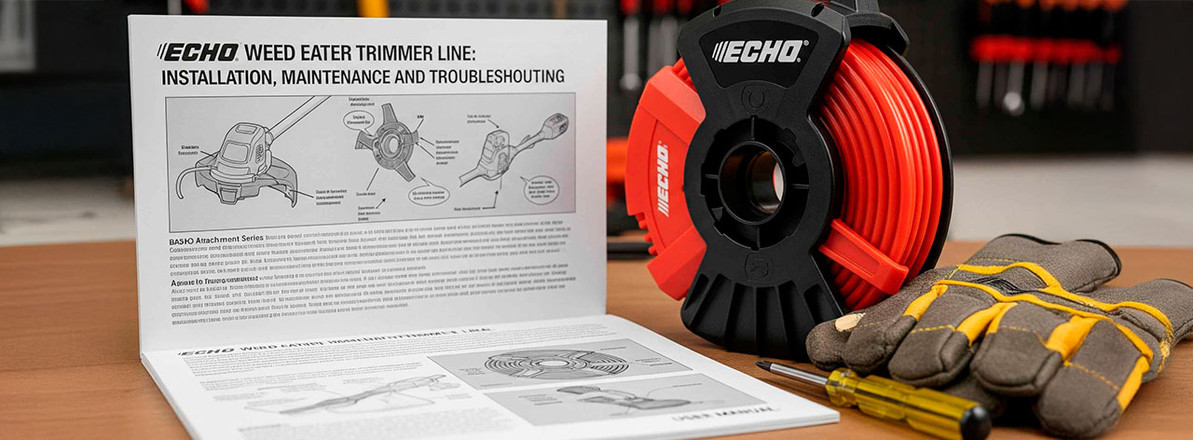
ECHO Weed Eater Trimmer Line: Installation, Maintenance, and Troubleshooting
Keeping your ECHO weed eater trimmer line in good condition is essential for consistent cutting performance and efficient lawn maintenance. Whether you're trimming grass around your yard or maintaining larger outdoor areas, using the right cutting line and keeping your trimmer head properly maintained can help prevent interruptions.
However, common problems such as broken string, tangled line, and feeding issues can make trimming more difficult than it needs to be.
In this guide, we'll explain how to choose the right ECHO trimmer line, maintain your cutting head, troubleshoot common problems, and identify when replacement components may be necessary.
With advice on how to start your trimmer, how to change the string, and how to troubleshoot issues, this guide is dedicated to maximizing the use of your weed eater in the shortest amount of time possible.
If your ECHO string trimmer will not start, needs a quick restring, or shows wear you are not sure how to fix, you've come to the right place. From basic string replacement to dealing with damaged parts, we assist in getting your trimmer functional again with the proper parts and easy-to-follow instructions.
¿How to choose the right ECHO Trimmer Line
Choosing the correct trimmer line is one of the most important steps in maintaining your ECHO weed eater. The line diameter, shape, and compatibility with your cutting head can affect cutting performance and how smoothly the line feeds during operation.
Before purchasing replacement string, check your equipment model and the specifications of the installed trimmer head. Not every ECHO weed eater supports the same line sizes or cutting attachments.
ECHO Trimmer Line Sizes: .080, .095, and .105 Inch
ECHO string trimmers may use different line diameters depending on the model and cutting head.
Common trimmer line sizes include:
- .080-inch trimmer line: Often used for lighter trimming applications when supported by the equipment.
- .095-inch trimmer line: A common option for general lawn maintenance and trimming thicker grass on compatible models.
- .105-inch trimmer line: May be suitable for more demanding cutting conditions when the trimmer and cutting head are specifically approved for this diameter.
Using thicker line doesn't automatically improve performance. An oversized line can interfere with the feeding mechanism or place additional load on the equipment.
Always follow the manufacturer's recommended line diameter rather than choosing a size based only on the vegetation you're cutting.
Round vs. Twisted Trimmer Line
Trimmer line is available in different shapes, including round and twisted designs. Each has characteristics that may influence cutting performance, noise, and durability.
- Round trimmer line is commonly used for routine lawn maintenance. Its simple shape makes it a versatile option for trimming grass and light vegetation.
- Twisted trimmer line features a spiral design that may help reduce aerodynamic noise and improve cutting characteristics in certain applications.
The best choice depends on the equipment, cutting conditions, and the manufacturer's recommendations.
Before switching line types, confirm that the selected diameter and design are compatible with your ECHO trimmer head.
How to check Trimmer Line compatibility
To find the correct ECHO replacement trimmer line, start by identifying your equipment model and cutting head.
Check the owner's manual or manufacturer specifications for the recommended line diameter and any restrictions related to cutting attachments.
If your trimmer has been fitted with a replacement head, follow the specifications for the installed head rather than assuming it uses the original configuration.
When shopping for replacement line, verify:
- Equipment model and installed trimmer head
- Approved cutting line diameter
- Manufacturer recommendations for line type
- Loading instructions and line capacity
Checking these details before installation can help prevent feeding problems and unnecessary wear.
How to String an ECHO Weed Eater: Step-by-Step
Replacing the string trimmer line on your Echo SRM‑225 doesn't have to be a chore. It's one of the simplest maintenance tasks you can do—and this KnowHowNow video shows you exactly how to do it fast, cleanly, and without frustration.

Here's the step-by-step process of how it's done, and what's most critical if you'd like to keep your Echo trimmer cutting like new.
Step 1: Remove the Bump Head Cap
Start by inverting the trimmer. Depending on the model, the bump head cap either snaps off under pressure from the sides or twists off. Inside, you'll find the spool and a spring—carefully remove both.
Step 2: Measure and Prepare the Line
Use .095" or .105" trimmer line. Cut a piece recommended by your echo trimmer parts manual (usually 20 feet), then fold it in half to find the midpoint. This loads both sides of the spool evenly.
Put each end of the line through the correct eyelets and begin winding in the arrow's direction—usually clockwise.
Step 3: Load and Wind Properly
Be sure to wind the line evenly and tightly. This will prevent jamming and allow for smoother feeding when utilizing the bump feed system. Leave approximately 6 inches of line protruding from each side upon completion.
Step 4: Reassemble the Spool
Replace the spool and spring into the head. Align holes in the spool with eyelets in the housing so the line feeds freely. Snap the bump cap back on until it clicks or locks into place.
Final Test: Bump and Go
Turn on the trimmer and hit the head on the floor. If it feeds the line correctly, you succeeded. If not, open it again and search for a tangled or crossed line.
You can find the following parts in our store.
Why This Matters
Whether you’re trimming the edge of your yard or clearing heavy grass, a properly loaded head makes your job faster, safer, and cleaner. Echo’s technical design makes the replacement simple, as long as you follow the right winding direction and use the correct line size.
This is one of those quick wins: no tools, no frustration—just a few minutes of prep for smooth cutting all season.
How to Start an ECHO Weed Eater Properly
Many customers ask how to start an ECHO weed eater—especially if they have no experience with a 2-cycle engine. Use this simple procedure:
- Move the switch to the "on" position.
- Prime the bulb 5–6 times, and you will see fuel.
- Set the choke to the closed position.
- Pull the starter rope until the engine comes up for a brief moment.
- Move the choke to the run position and pull again to fully start.
What Size Eater String for ECHO?
The string size depends on your model, but most ECHO weed eaters use either 0.080" or 0.095" line. For lighter, residential use, stick to 0.080". For heavier trimming or commercial jobs, 0.095" provides more strength and durability without slowing the tool down.
Using the correct line size helps avoid performance issues like the trimmer bogging down when you give it gas, a common complaint linked to incorrect string type or engine strain.
Quick Troubleshooting When You're There
If your ECHO trimmer won't work properly, it could be related to simple repairs:
- Why won't my ECHO weed eater begin? Nine out of ten times, it's because it contains stale fuel, a plugged air filter, or a filthy spark plug.
- ECHO weed eater bogging when I open the throttle? That generally means that the carburetor or fuel lines need to be cleaned.
- New to this? Here's how to start an ECHO weed cutter: prime the bulb, put the choke, pull to fire, then set the choke to run and pull again.
You can fix these issues easily, remaining on course.
How much is an ECHO Weed Cutter
Prices are model-dependent, but if you're considering how much an ECHO weed eater costs, their entry-level models begin at about $160, and stronger, commercial-style models will be in the $300 or more range. Considering the speed and convenience you receive, most users feel that ECHO is a good value.
¿When should you replace your ECHO trimmer head parts?
Some trimmer line problems can be resolved by reloading the string or cleaning the cutting head.
However, damaged or excessively worn components may require replacement.
Inspect your trimmer head if you notice:
- Cracked or damaged housing components
- Worn or damaged line eyelets
- A bump knob that no longer functions correctly
- Damaged spool components
- Persistent feeding problems after correct line installation
Depending on the head model, individual components may be available separately.
Before purchasing replacement parts, identify your ECHO equipment model, installed trimmer head, and manufacturer part number.
Replacing the correct component can help restore normal operation without unnecessarily replacing the entire assembly.
Find ECHO Trimmer Line and replacement parts
Using compatible replacement parts is important when maintaining your ECHO weed eater.
Whether you need replacement trimmer line, a spool component, a bump knob, or a complete cutting head, start by identifying the equipment and installed head.
At ECHO Parts Online, you can explore available ECHO trimmer replacement parts and use model-specific parts information to help identify the components you need.
Before ordering, compare the manufacturer's part number and applicable compatibility details with your equipment.
Keeping commonly used maintenance components available can also help reduce interruptions during routine lawn care.
ECHO Trimmer Line FAQs
¿What Size Trimmer Line Does an ECHO SRM-225 Use?
The appropriate trimmer line diameter for an ECHO SRM-225 depends on the cutting head installed and the applicable manufacturer specifications.
The SRM-225 is commonly associated with .095-inch line in compatible configurations, but you should verify the requirements of your specific head before installing replacement string.
Do not assume that a larger diameter is compatible simply because it fits through the loading openings.
¿Can I Use Thicker Line in My ECHO Weed Eater?
Only use thicker trimmer line if the manufacturer approves that diameter for your equipment and cutting head.
An oversized line can interfere with feeding, increase operating load, or contribute to equipment performance problems.
Check the recommended diameter range before changing line sizes.
¿How Often Should I Replace ECHO Trimmer Line?
There is no single replacement interval that applies to every ECHO trimmer.
Cutting line wears down during normal operation, and replacement frequency depends on how often you trim, the vegetation being cut, and contact with hard surfaces.
Replace the line when the head runs low, the string becomes damaged, or feeding problems cannot be resolved through proper reloading.
¿Can a Worn Trimmer Head Cause Feeding Problems?
Yes. Worn or damaged trimmer head components can interfere with normal line feeding.
Problems involving the bump knob, spool, eyelets, or internal feeding mechanism may prevent the line from advancing correctly.
Inspect the head for damage and confirm that the line is installed properly before replacing components.
Keep your ECHO weed eater ready for regular maintenance
Choosing the correct ECHO trimmer line, maintaining the cutting head, and addressing feeding problems early can help keep your equipment operating as intended.
Whether you're dealing with broken string, tangled line, or worn trimmer head components, start by checking compatibility and following the manufacturer's maintenance instructions.
For replacement components and equipment-specific parts information, explore ECHO Parts Online and find the parts that match your trimmer model.
Recent Posts
-

How to Replace Echo Weed Eater String Line: Simple Guide for All Echo Models
Replacing the string on your ECHO weed eater is an important part of keeping your trimmer ready for …Dec 12th 2025 -

Echo SRM-225: The 2025 Trend in Power and Reliability
The Echo SRM-225 remains one of the most trusted trimmers for homeowners and professionals alike. As …Nov 3rd 2025 -

Echo Chainsaw and Best Lawn Mowers Models in 2025: Performance, Innovation, and Reliable Parts
When it comes to professional-grade chainsaws, Echo continues to be a frontrunner in 2025. Known for …Oct 7th 2025